
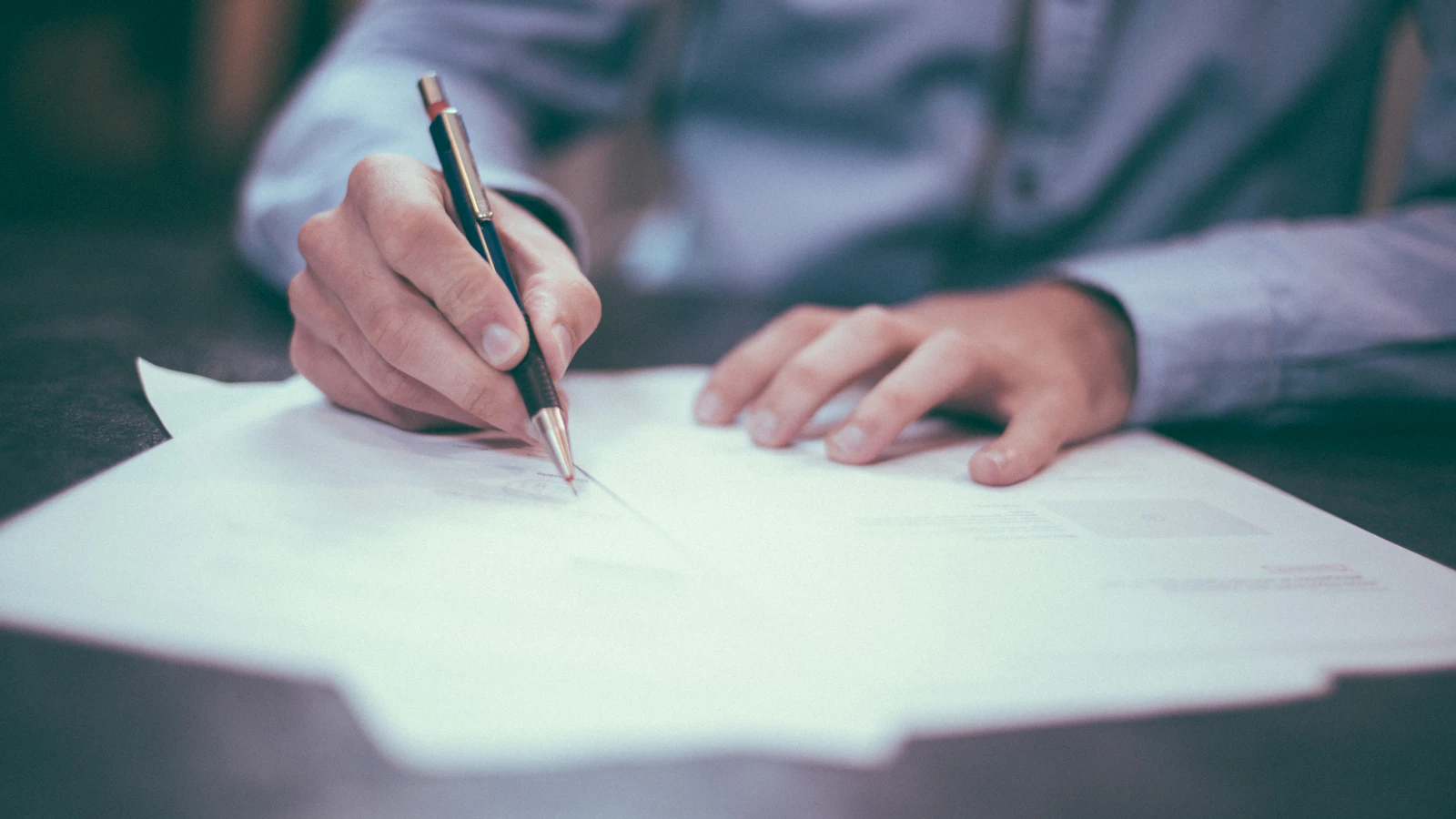
The single thing that surprises most Sri Lankan students about the Netherlands is that you don’t apply for your own visa — your university does. There’s no consulate interview to dread and no DIY application portal to wrestle with. But that only works if you understand the machinery behind it: the MVV, the VVR, and the TEV procedure that ties them together.
IND fees, the funds requirement and processing rules change — usually every 1 January. The figures below are current at the time of writing and illustrative only. Always confirm the live numbers with the IND and your university, or with our counsellors, before you transfer money or book travel.
Two permits, one application
As a Sri Lankan national you need two separate things to study in the Netherlands, and it helps to keep them distinct in your head:
- check_circle MVV (machtiging tot voorlopig verblijf) — the entry visa sticker that goes in your passport. It's what physically lets you board the plane and enter the country.
- check_circle VVR (verblijfsvergunning regulier) — the residence-permit card you carry once you're living in the Netherlands. It's your legal status for the whole study period.
Here’s the part that changes everything: you don’t lodge two applications. Your university lodges one combined application with the IND — the TEV procedure (Toelating en Verblijf, “Entry and Residence”) — and the IND processes the MVV and the VVR together. By the time you’ve got your MVV, the residence permit is already approved and waiting; you just collect the card after you land.
Only a recognised sponsor can do this
This is the load-bearing rule. The IND only lets recognised sponsors apply for student residence permits. A recognised sponsor is an institution that has signed the Code of Conduct for International Students in Higher Education and is listed on the IND’s public register.
- check_circle You cannot apply for the MVV/VVR yourself — the institution applies for you.
- check_circle If a university isn't a recognised sponsor, it cannot run the TEV procedure for you. Before you accept an offer, confirm the institution is on the IND register.
- check_circle Almost every research university (WO) and university of applied sciences (HBO) you'd realistically apply to is recognised — but check, don't assume.
Pro Counsellor Tip
"
Because the university — not a visa officer — owns your IND file, your most important relationship is with the international/admissions office, not a consulate. The single biggest cause of delay we see is slow replies to their document requests. Treat every email from them as urgent and send exactly what they ask for, in the format they ask for.
"The documents — and the Sri Lanka–specific steps
The university will give you a checklist, but the items that trip up Sri Lankan applicants are almost always the civil and education documents, because foreign documents must be legalised and translated (into Dutch, English, French or German) before the IND will accept them.
- check_circle Valid passport with enough validity and blank pages.
- check_circle Birth certificate — legalised. Sri Lanka is not in the Apostille Convention, so this means consular legalisation: certified, then authenticated by Sri Lanka's Ministry of Foreign Affairs (MOFA) in Colombo, and then by the Dutch representation. Build in weeks for this, not days.
- check_circle Education documents — your O/L and A/L results, and any degree certificates and transcripts for Master's or PhD applicants, may need the same legalisation chain depending on what the university requests.
- check_circle Proof of admission / registration to an accredited programme — your university handles this side.
- check_circle Proof of funds (see below).
- check_circle Health insurance that meets Dutch requirements, arranged before or shortly after arrival.
The MOFA authentication step is the one to start early. If your birth certificate is in Sinhala or Tamil only, you’ll also need a certified English translation before legalisation.
Proof of funds: what to show and where to hold it
Separate from tuition, the IND requires you to prove you can support yourself for the year — the study norm. For 2026 the higher-education norm is €1,130.77 per month (around LKR 384,000), which works out to roughly €13,569 for the year — about LKR 4.6 million. This is on top of your tuition.
Crucially, the money doesn’t have to sit in your own account. The IND accepts it held in:
- check_circle Your own bank account, with full access to withdraw it,
- check_circle Your educational institution's account (many universities offer to hold the funds and release them to you monthly after you arrive — often the cleanest option for Sri Lankan families), or
- check_circle A sponsor's account — for example a parent funding you — provided the paperwork shows the commitment.
Want us to map your Dutch permit file end to end?
Bring us your target university and intake. We'll confirm whether it's an IND-recognised sponsor, lay out exactly which Sri Lankan documents need MOFA legalisation, and tell you how much to show for the study norm and where to hold it.
Plan My Netherlands Permit event_availableverified100% free for students. Universities pay us, not you. How?
The fee and the timeline
The IND charges an application fee for the study residence permit — currently €254 (around LKR 86,000). Your university will usually invoice this to you alongside the application, or collect it as part of your deposit.
On timing, the IND has a legal decision period of 60 days from a complete application — and in practice, when the file is clean and the university is an experienced sponsor, decisions often land well inside that window. The biggest variable is not the IND; it’s how fast your documents (especially the legalised Sri Lankan ones) reach the university.
Collecting the MVV in Colombo, then the VVR after you land
Once the IND approves, the sequence is mechanical:
- check_circle You book an appointment at the Dutch representation to collect your MVV. For Sri Lanka this runs through VFS Global in Colombo. You attend in person — your biometrics (fingerprints, photo) are captured here and the MVV sticker goes into your passport.
- check_circle The MVV is valid for 90 days — fly within that window.
- check_circle After you arrive in the Netherlands, your university is notified when your VVR card is ready at the IND desk. You make an appointment and collect the physical residence-permit card. That card is your status for the rest of your studies.
Pro Counsellor Tip
"
Don’t book non-refundable flights until your MVV sticker is actually in your passport. The MVV approval and the physical sticker are not the same moment, and VFS appointment slots in Colombo can be tight around peak intake months — book the appointment the instant you’re invited.
"The bottom line
The Dutch student route feels gentler than the UK or USA precisely because the heavy lifting sits with a recognised-sponsor university through one combined TEV application — not with you in front of a visa officer. Get three things right and the rest tends to follow: confirm your university is IND-recognised, start the MOFA legalisation of your birth and education documents early, and have the study-norm funds ready in an acceptable account.
Next steps
Bring us your target university and intake and we’ll pressure-test the file before it ever reaches the IND — sponsor status, the document legalisation chain, and your funds plan. Start with our Netherlands student-visa guide and the wider Netherlands study guide, then book a visit to one of our offices. Our help with your application costs you nothing.
Written by
Lakmal Silva
Founder
Lakmal Silva founded Lanka Scholar to help Sri Lankan students apply abroad without paying agent fees, and works with applicants across 18 destinations from the team offices in Rajagiriya, Jaffna and Matara.
badge Verify this author on LinkedIn
Book an office visit to ask the team in person event_available