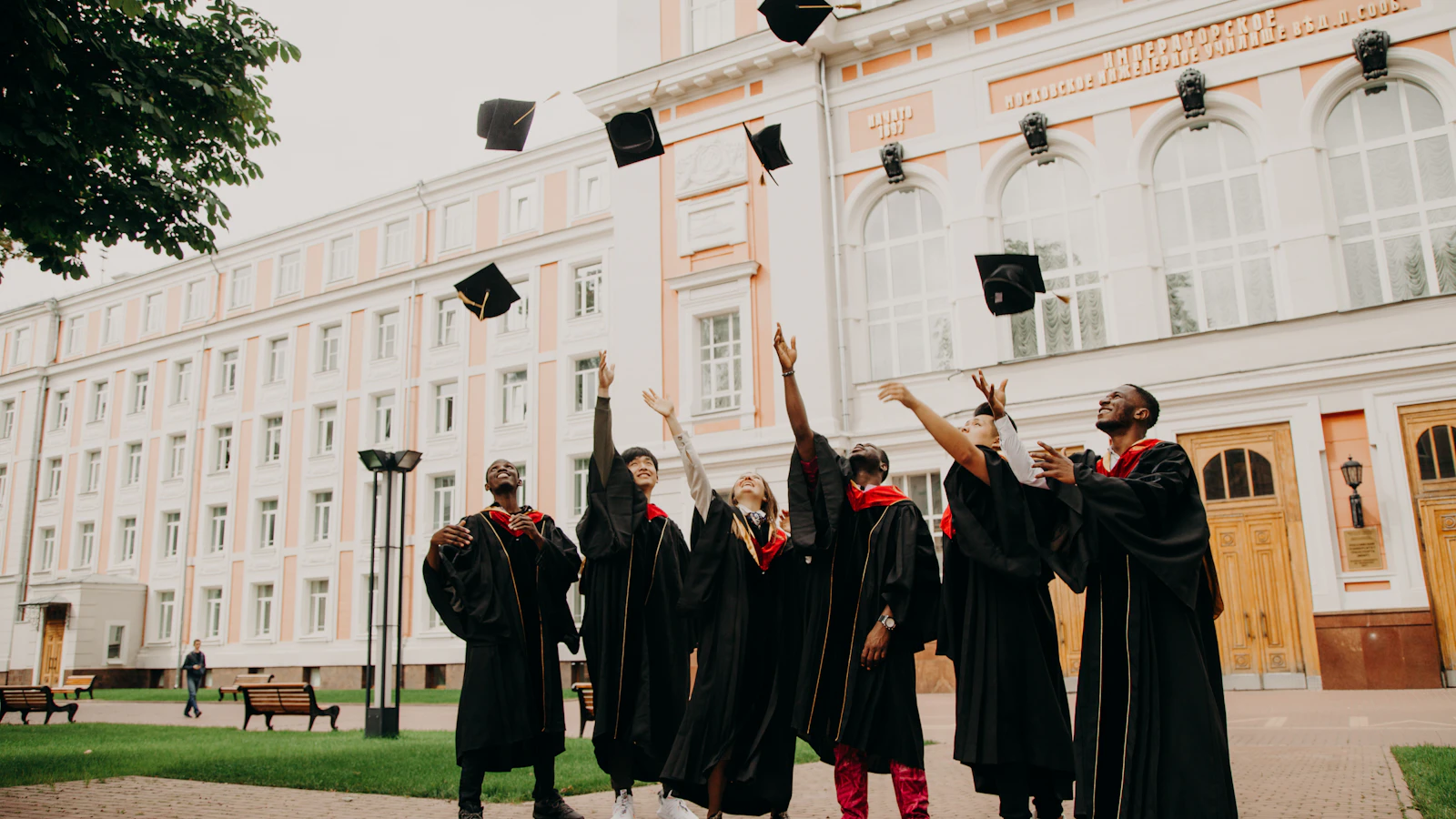
South Korea has gone from a niche choice to a serious option for Sri Lankan students — world-top engineering and tech, a stack of fully-English master’s programmes, one of the most generous government scholarships anywhere, and a clear route to stay and work after you graduate. If you assumed you’d need fluent Korean to even apply, that assumption is out of date.
Visa funds, scholarship terms, tuition and work rules change every year. The figures below are illustrative — always confirm the current numbers with the Korean Embassy, your university, or our counsellors before you move money or sign anything.
Why South Korea
- check_circle Global powerhouses in engineering, IT and the sciences — Seoul National University (SNU), KAIST, Yonsei, Korea University, POSTECH and more
- check_circle A large and growing menu of English-taught degrees — KAIST teaches its programmes in English, and the international graduate schools (GSIS) at Yonsei, Korea University and SNU run master's degrees fully in English
- check_circle The Global Korea Scholarship (GKS) — a government scholarship that covers tuition, flights, living costs and a year of Korean lessons
- check_circle A strong jobs market in electronics, semiconductors, gaming, automotive and K-content, plus a stay-back visa to job-hunt after graduation
- check_circle Safe, well-connected cities and a fast-growing Sri Lankan and South Asian community
Korean universities recruit at every level — Bachelor’s, Master’s and PhD — and the English-taught options are concentrated at the postgraduate end, especially in engineering, business and international studies.
English-taught vs Korean-taught: where TOPIK matters
This is the question Sri Lankan students get wrong most often. TOPIK (the Test of Proficiency in Korean) is not a blanket entry requirement.
- check_circle English-taught tracks — KAIST's English-medium programmes and the GSIS master's at Yonsei, Korea University and SNU generally admit you on your academic record and an English test (IELTS/TOEFL), with no TOPIK needed for admission
- check_circle Korean-taught programmes — most undergraduate degrees and many local-stream postgraduate courses do require TOPIK, often Level 3 and up
- check_circle Either way, TOPIK pays off later — it unlocks more part-time work hours, strengthens scholarship and job applications, and makes daily life far easier
So a Sri Lankan A/L school-leaver eyeing an undergraduate degree usually needs Korean; a graduate targeting an English-taught master’s in engineering or international studies often doesn’t.
Pro Counsellor Tip
"
Even if your programme is 100% English, start basic Korean before you fly. The single biggest quality-of-life — and employability — gap we see is between graduates who learned the language and those who treated Korea as an English bubble. GKS builds in a funded year of Korean lessons precisely because it matters.
"The money: tuition and the D-2 funds requirement
Two separate numbers matter:
- check_circle Tuition: varies widely — many national universities and science institutes (KAIST, SNU) are comparatively affordable for non-Koreans, while private universities sit higher. Confirm the exact figure on your offer letter.
- check_circle D-2 visa funds: Sri Lanka is on Korea's list of countries whose nationals must show financial evidence. The benchmark is around 20,000,000 KRW (or roughly USD 20,000) — about LKR 4.4 million — inclusive of your tuition, shown as a certified bank-balance certificate.
The balance is usually expected to have been held for several weeks before you apply, and embassies want a proper balance certificate, not a transaction printout. Seoul is the most expensive city to live in; cities like Daejeon, Gwangju and Busan stretch a Sri Lankan budget considerably further.
The Global Korea Scholarship (GKS)
If your profile is strong, GKS is one of the best-value scholarships on the planet — and it’s worth building your whole plan around. The government (NIIED) funds it, and the package typically covers:
- check_circle Full tuition, waived by the host university
- check_circle A monthly living allowance of around 1,000,000 KRW — roughly LKR 220,000
- check_circle A round-trip economy flight and a settlement allowance
- check_circle One year of Korean language training before your degree
- check_circle Medical insurance, and a Korean-proficiency grant for higher TOPIK levels
GKS runs two routes — an Embassy track (apply through the Korean Embassy serving Sri Lanka) and a University track (apply directly to the university). It’s competitive — strong grades (typically top of your class) and a clear study plan matter — but Sri Lankan students do win it.
Thinking about Korea — or aiming for GKS?
Aiming for Korea or GKS? Bring your transcripts with grades, any TOPIK or IELTS results and your intended field to a free office visit. We'll assess whether an English-taught programme or a GKS application is realistic and map the D-2 funds you'd need.
Explore South Korea Options event_availableverified100% free for students. Universities pay us, not you. How?
Working while you study
On a D-2 student visa you can work part-time, but only with permission from immigration first — and the rules are conditional, not automatic:
- check_circle You generally need a part-time work permit before you start, plus a minimum Korean proficiency (typically TOPIK Level 3 or higher) to access the standard hours
- check_circle Allowed term-time hours scale with your TOPIK level — lower proficiency means fewer hours, higher proficiency unlocks more, and longer hours during vacations
- check_circle Most universities also expect you to keep a reasonable academic standing (around a C grade / 2.0 GPA) to qualify
Treat any earnings as a top-up to a properly-funded budget — never as the thing that makes your D-2 funds add up. Korean immigration enforces work-hour limits strictly, and a violation can cost you your visa.
Staying on after graduation: the D-10 visa
Korea’s post-study route is the D-10 job-seeking visa, which lets you stay to look for work or do internships after you finish:
- check_circle Recent graduates of a Korean university can switch from D-2 to D-10 — and as a recent grad you're generally exempt from the points test that other applicants face
- check_circle It can run for up to two years for graduates moving from a D-2 student visa, giving you a real runway to find a role
- check_circle Once you land a qualifying job, you switch to the appropriate work visa (such as E-7) with employer sponsorship
That stay-back window is what turns a Korean degree into a Korean career, rather than just a qualification you bring home.
The bottom line
South Korea suits the ambitious Sri Lankan student who wants top-tier engineering, tech or international-studies teaching — often in English — with a genuinely affordable government-scholarship path and a clear stay-back route. The key decisions are English-taught vs Korean-taught (which sets whether you need TOPIK) and whether to build your plan around GKS.
Next steps
If Korea is on your shortlist, see our South Korea study guide, the cost breakdown, the student-visa guide, and current scholarships — then bring us your level, field and grades. We’ll shortlist realistic English-taught programmes, assess your GKS chances, and map your D-2 funds and TOPIK timeline. Lanka Scholar charges students nothing for this.
Written by
Lakmal Silva
Founder
Lakmal Silva founded Lanka Scholar to help Sri Lankan students apply abroad without paying agent fees, and works with applicants across 18 destinations from the team offices in Rajagiriya, Jaffna and Matara.
badge Verify this author on LinkedIn
Book an office visit to ask the team in person event_available